Santa Fe Theatre faculty Russell Schultz builds stages where students learn to be
giants — from Cole Porter’s Anything Goes to a feature-film George Washington.
On opening night of Santa Fe College’s Anything Goes, the house lights dim and Associate Professor Russell Schultz is already where he
always is — half in the wings, half in the story. Cole Porter’s shipboard comedy is
loud, bright, and relentlessly precise. Schultz watches the room the way he has watched
rooms since he was six: for the moment a student stops apologizing for taking up space
and starts using it.
He teaches Theatre in Santa Fe’s Fine Arts program. He also happens to be the face
of George Washington in the feature film A Great Awakening. The through-line between those two roles is not fame. It is craft — the slow work
of showing up prepared, listening harder than you speak, and treating a joke’s timing
like homework.
“Not being into sports or an athlete, you were invisible if you didn’t,” he says of
growing up in Dallas, when every kid wanted to be the next Roger Staubach. “But I
realized that, when I did talent shows as a kid, I could entertain people and make
them laugh. I was small for my age, but I felt like a giant on stage.”
His vocabulary
Words that keep circling the Fine Arts building
Chapter · The first switch
Business lasted two weeks. Acting stuck.
Schultz treats Santa Fe rehearsal rooms like laboratories. Students who thought theatre
was “extra” leave knowing it is craft — cue sheets, breath, the difference between
a laugh that lands and a laugh that apologizes. That insistence did not appear overnight.
It started with a kid who felt invisible until a talent-show mic told him otherwise,
then a college freshman who had to argue for the same feeling in more formal language.
He went to a small liberal arts college in Iowa on a German scholarship. Acting did
not look like a viable vocational path, so he started as a business major — and quietly
abandoned the idea after a couple weeks of accounting. “My mind just doesn’t operate
that way,” he said.
The permanent turn came after watching a classmate onstage. He switched to acting
before he had “sniffed a single line of Hamlet,” then applied a businesslike discipline
to the new major anyway. “I had to explain to my parents about the decision, but after
that first acting class in the spring of my freshman year, I never looked back. I
think they could also sense that I might be a good teacher.”
By junior year the faculty trusted him enough to mentor underclassmen in the college’s
acting pedagogy — an unofficial T.A. role at a school without a graduate program.
“I began to develop my own teaching approach,” he said. That early switch still shapes
how he talks to Santa Fe students who arrive unsure whether they belong in a rehearsal
room. He tells them what the stage told him: size is optional; presence is not.
Three looks at the production
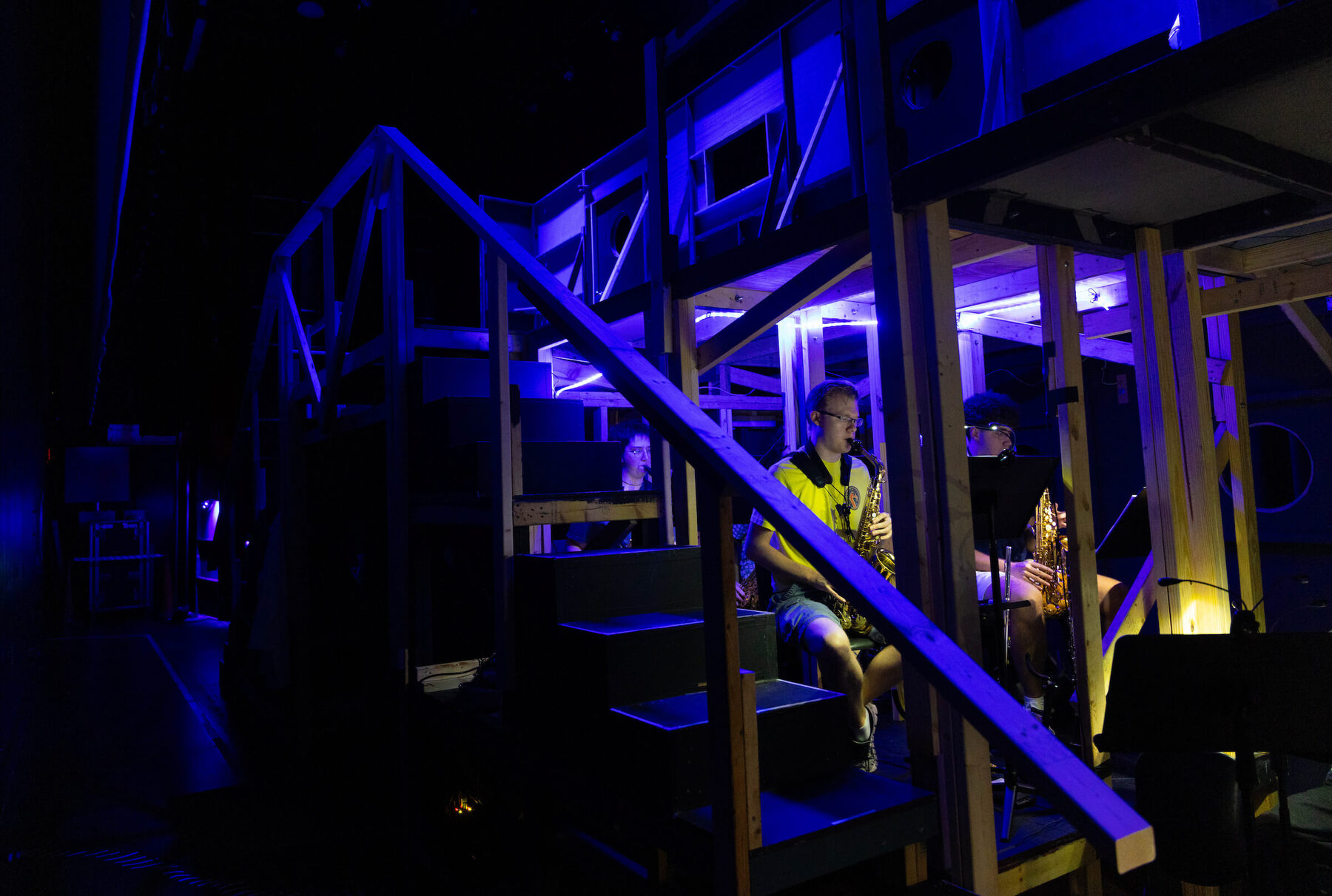
Anything Goes, April 2026 — students finding the tempo Cole Porter left them.
“
I was small for my age, but I felt like a giant on stage.
Russell Schultz · Associate Professor, Theatre
Chapter · Detours that held
New York, security clearances, and a spouse who named the real job
After graduation he worked local theatre, TV, and commercials back in Dallas. Then
the allure of New York arrived the way it does in movies: he sold his car to finance
the shot — “a scene from Mr. Holland’s Opus,” he jokes.
Then came September 11. The seismic shift redirected him toward service. He took a
job as a project manager while earning a graduate degree from John Jay College of
Criminal Justice in security management, providing protection assessment and oversight
for an elite clientele that included the Metropolitan Museum of Art, the Museum of
Modern Art, and Sotheby’s. “I felt like I had done my thing in New York, and I wanted
to move on to a place with beaches and water, where I could have a car,” he said.
Florida offered a translation of that high-profile experience into installing security
systems for NASA launch towers. The stress and unpredictability wore on him and his
new bride, Deidre, who finally named what everyone could already see. “You’re going
to be dead before 50 if you keep this up; what do you want to do?”
She convinced him to chase the theatrical passion and the early teaching instinct
— and to get the master’s credentials to match. With the first of their six children
on the way, she kept him pointed at auditions through the gauntlet of fatherhood and
graduate study. “I went to an audition back in New York for a bunch of graduate schools,
and received offers from five of them,” Schultz said. “I chose UF because we were
close to Gainesville, and they had the best voice teacher in the country where I was
concerned, Yanci Bukovec, a Hungarian artist/mime who was Marcel Marceau’s performance
partner for years. He was a mime who taught voice; I was blown away by that … a complete
performer.”
That attention to craft is what Santa Fe students meet now — not a shortcut biography,
but a person who left stages, returned to them on purpose, and still treats every
cue as unfinished business. In the Fine Arts building, Anything Goes is less a revival than a master class in precision disguised as fun.
Path · drawn on scroll
From Dallas talent shows to the Fine Arts building
Dallas · first stage laugh
Dallas. Talent shows instead of football — the first time the room laughed with him, not
past him.
Iowa. German scholarship, two weeks of accounting, then a permanent switch to acting.
Santa Fe. Associate Professor of Theatre — rehearsal as pedagogy, students as colleagues-in-training.
Now. Directing Anything Goes while starring as George Washington in A Great Awakening.
Chapter · The Fine Arts building
Rehearsal as pedagogy
At Santa Fe, Schultz is Associate Professor of Theatre — the same mentoring instinct
he practiced as an undergraduate T.A., now aimed at students who may be taking Theatre
Appreciation between nursing labs, or who walked into Fine Arts looking for an elective
and found a vocation instead.
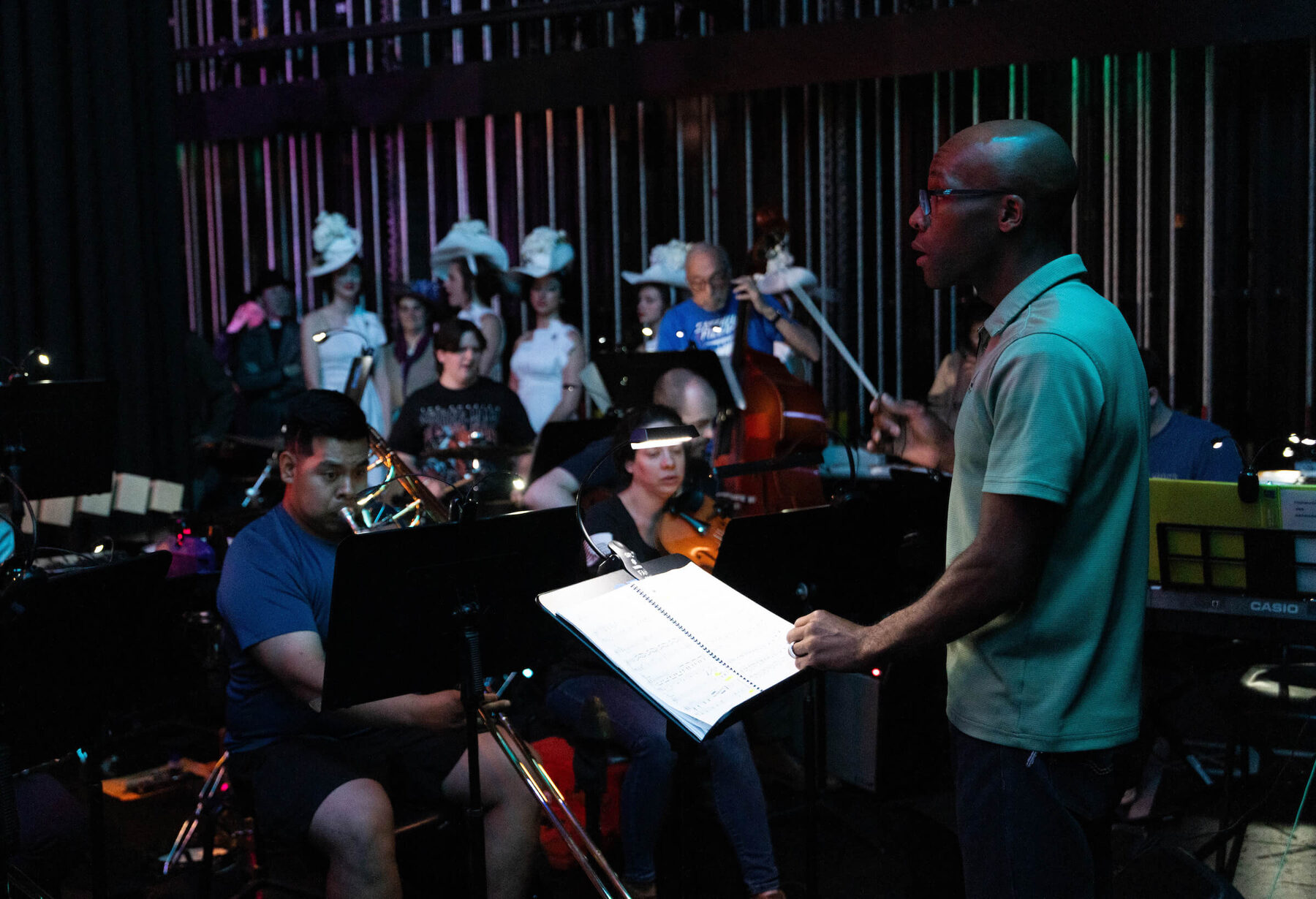
Anything Goes asks a cast for the hardest kind of comedy: ease that only arrives after repetition.
Porter’s songs leave no place to hide. Entrances have to land. Harmonies have to lock.
A tossed-off line still needs a spine. Schultz’s classrooms treat that pressure as
the point. Attention is not a personality trait; it is a craft students practice until
the house can feel it.
He still talks about mentorship the way he talks about scene work — as a relationship
that outlasts a semester. Keep one faculty relationship after you graduate, he tells
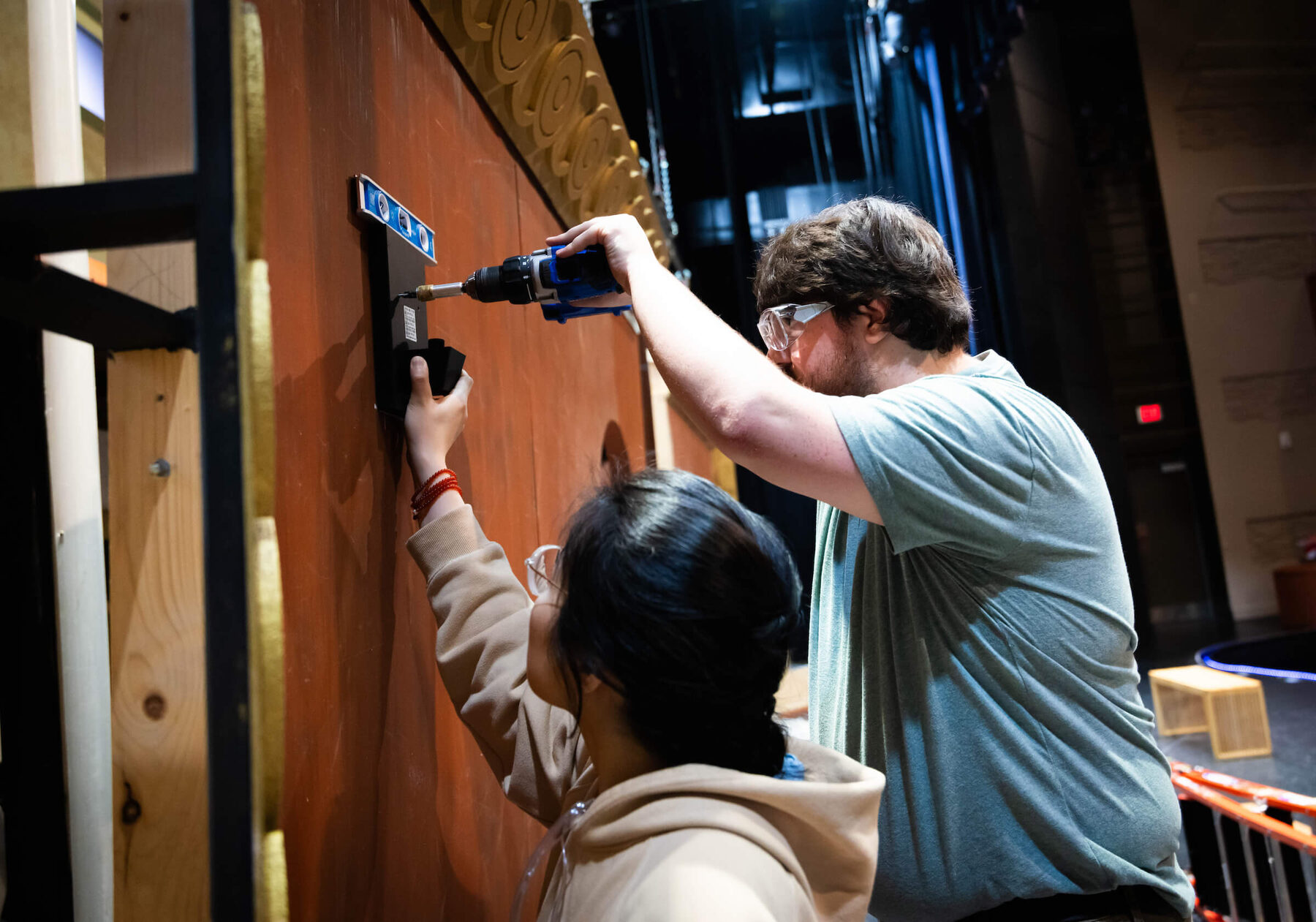
students. The production photos that follow are not decoration for that idea. They
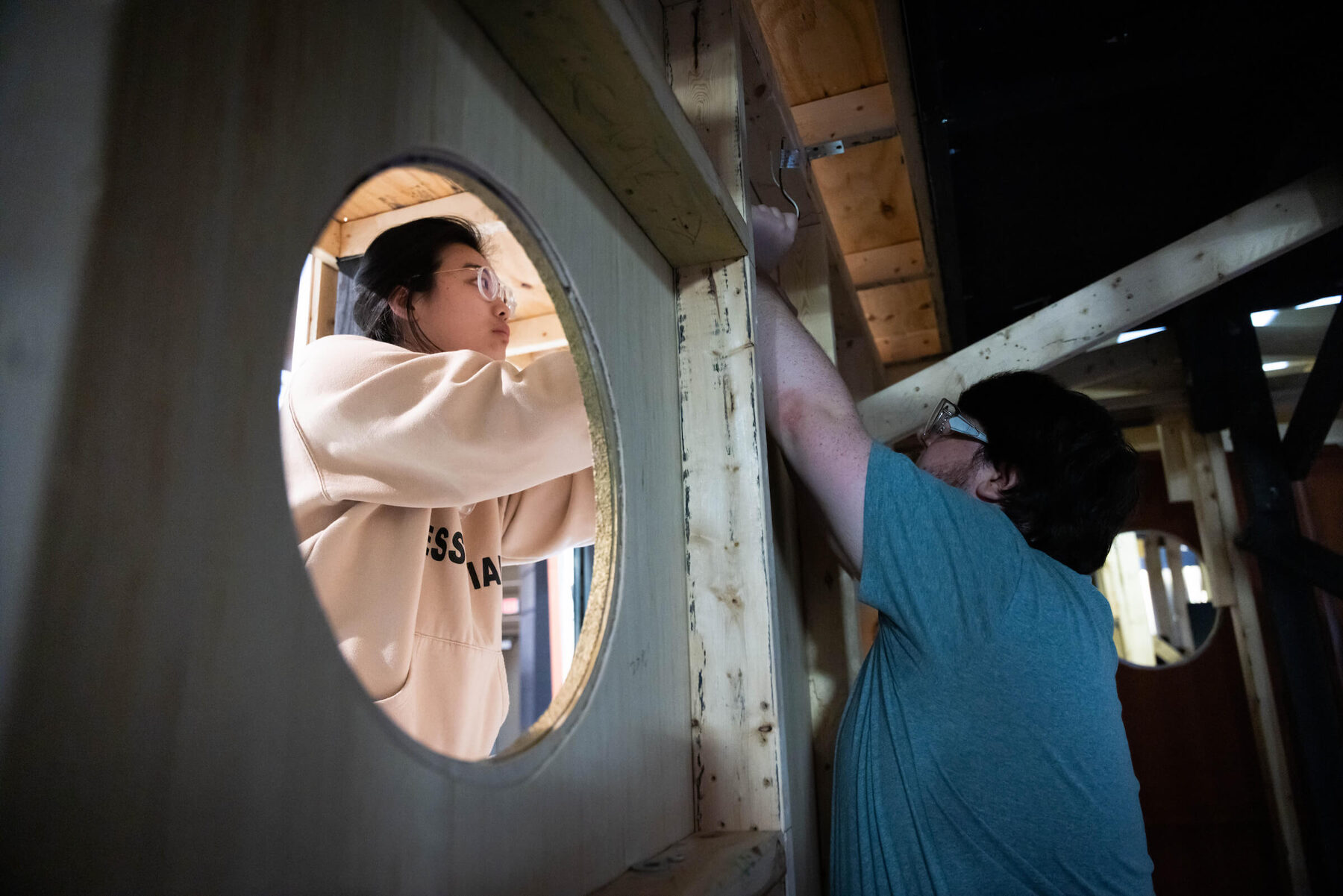
are the syllabus made visible: tape marks on the floor, sheet music on a stand, a
company learning to listen between cues.
Depth gallery
Portraits, production stills, the work between cues.
Between portraits and production stills is the quieter work: notes after a run, a
student who finally stops rushing the laugh, a faculty artist who still treats every
call-back headshot energy as a teaching tool. The next stretch of the story walks
four of those frames — faculty artist, rehearsal, opening night, offstage — without
leaving the campus that keeps him here.
Scroll the scenes
One faculty artist, four frames
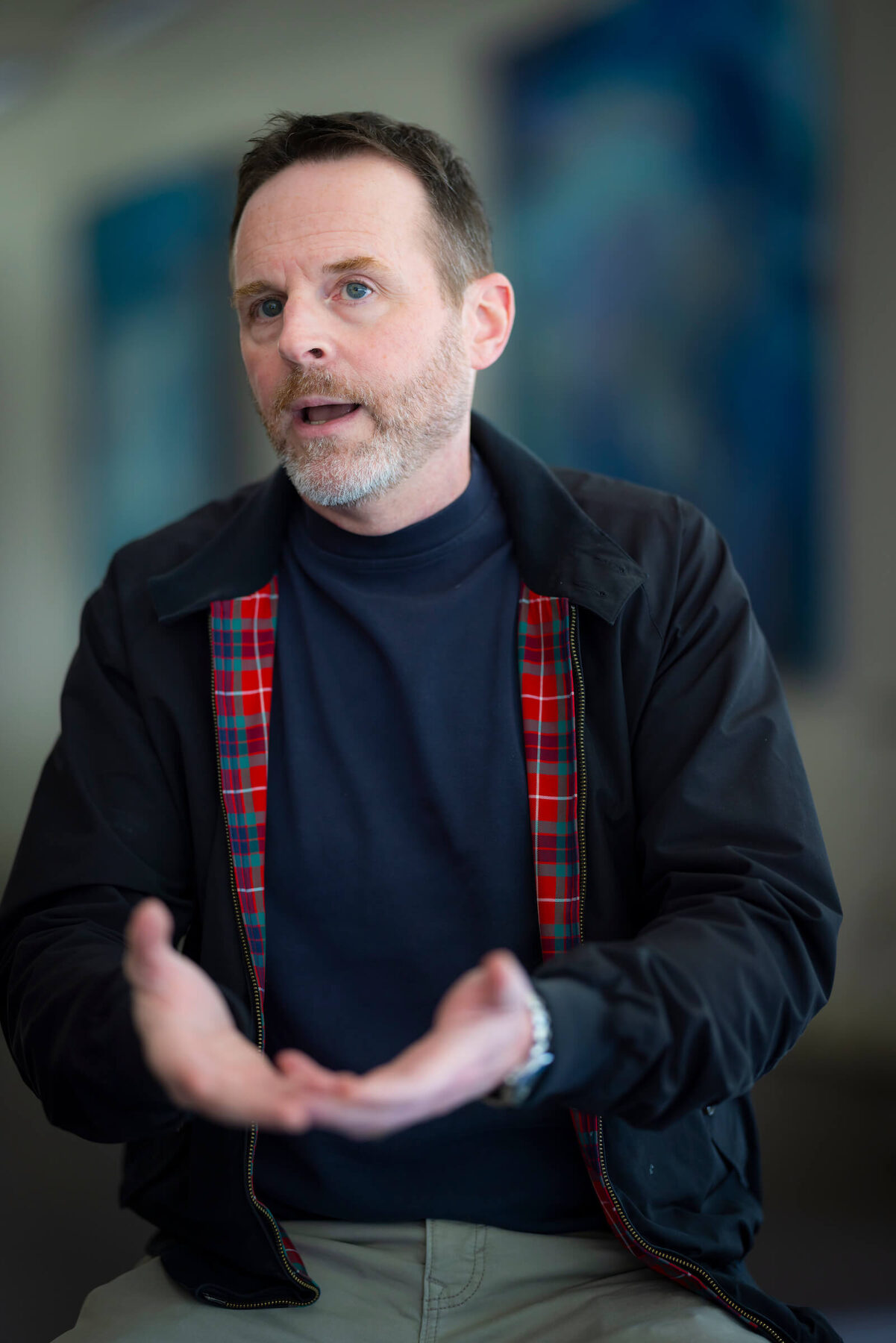
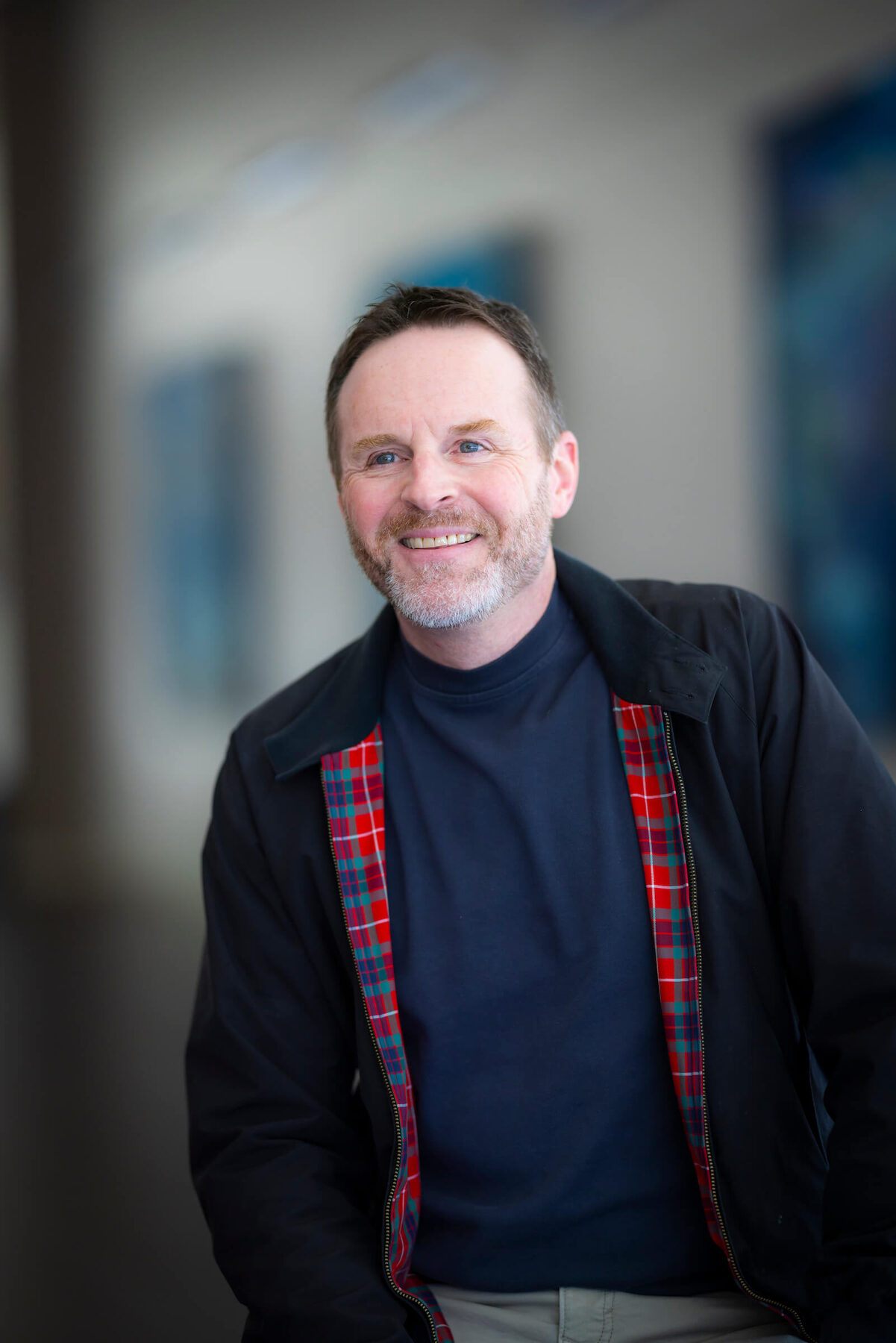
The faculty artist
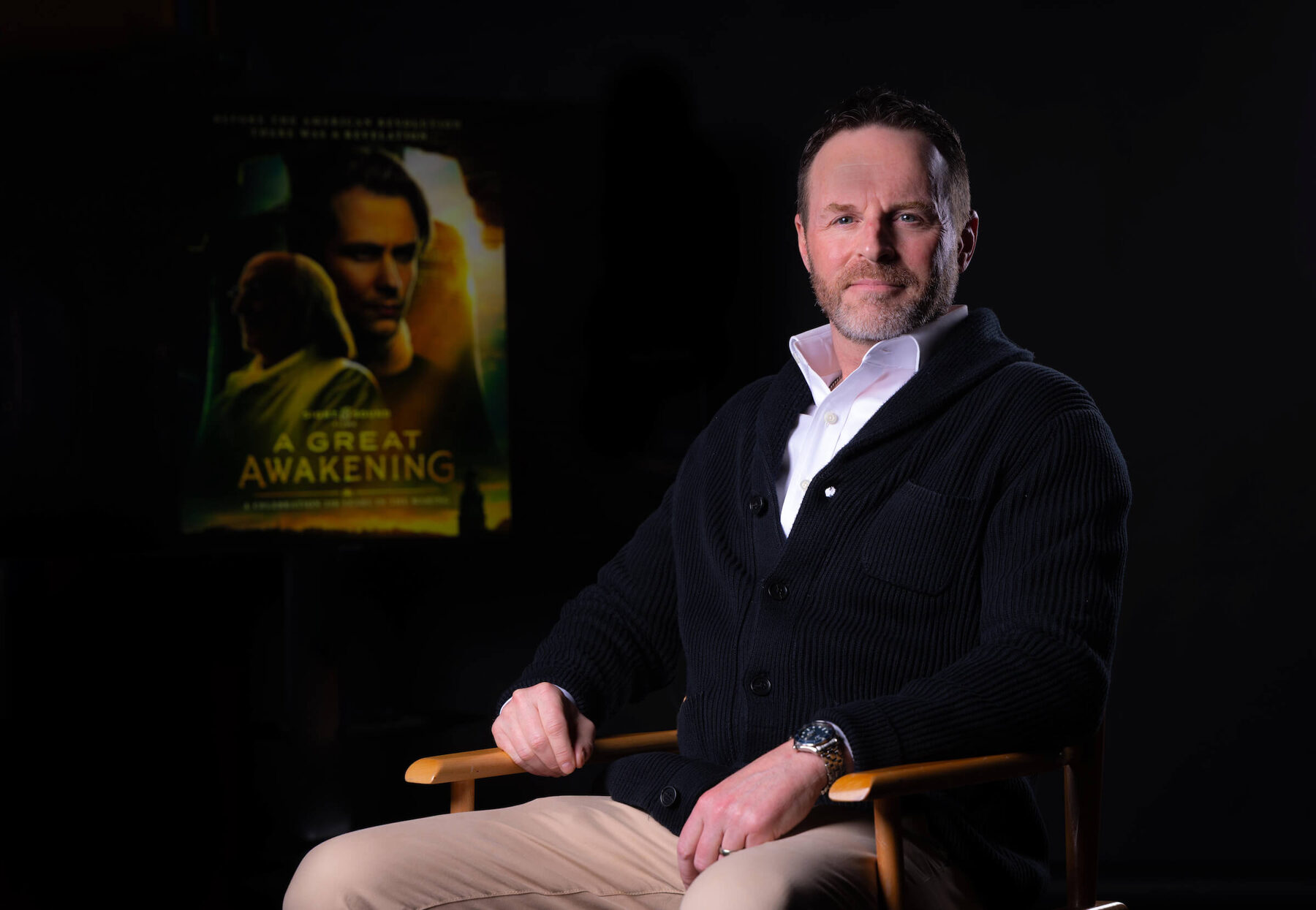
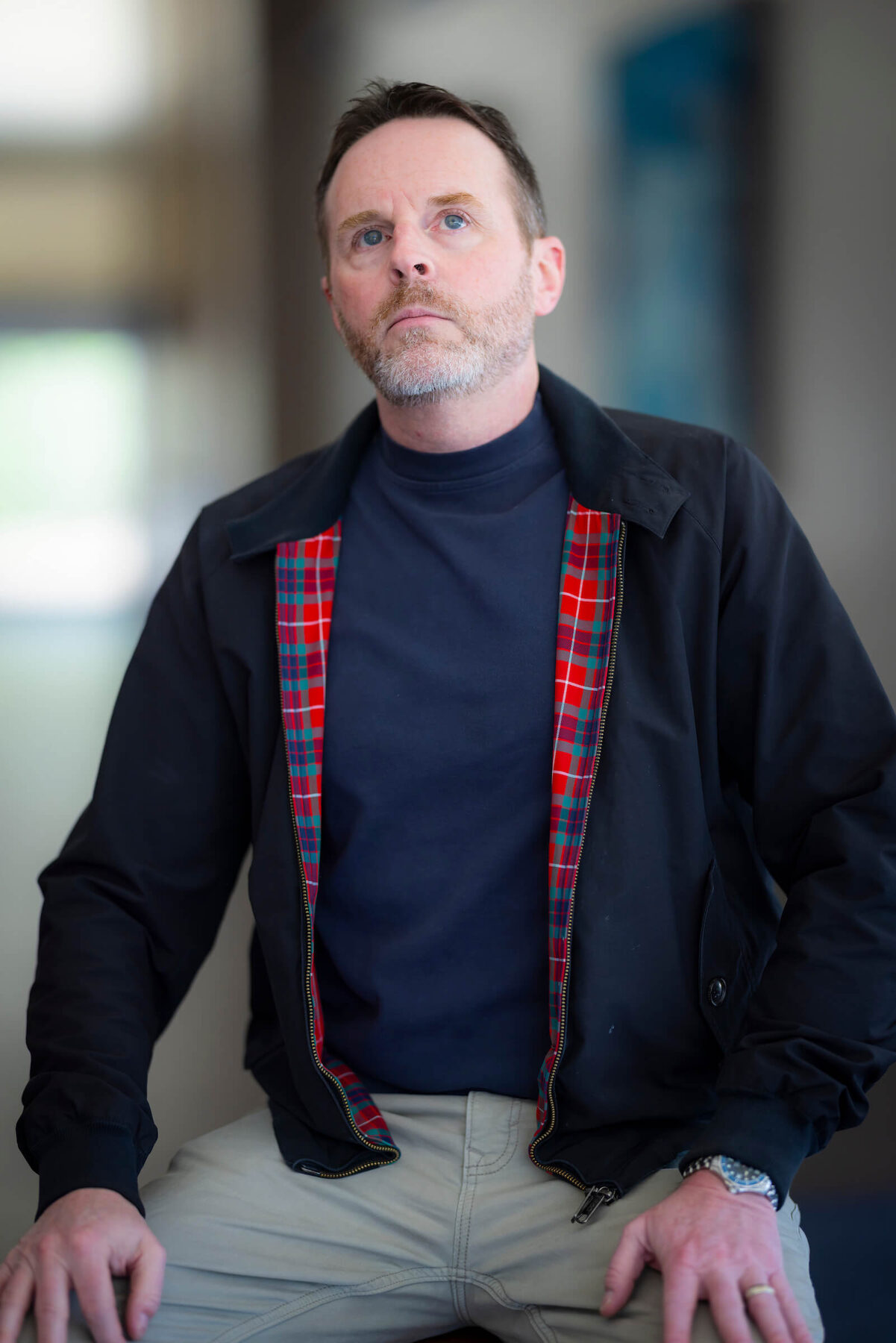
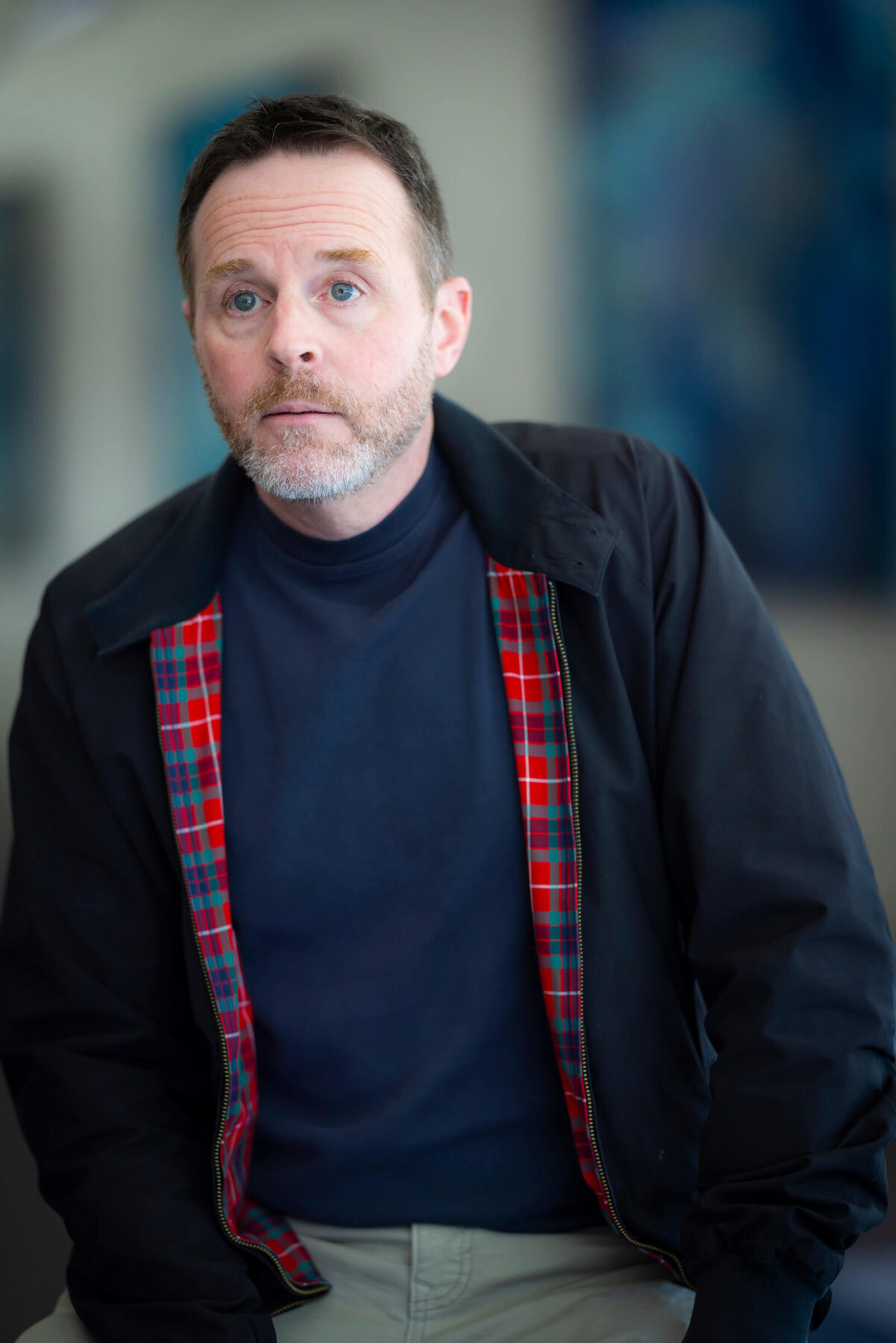
A headshot that still means “call back”
Schultz never stopped treating teaching like performance — prepared, present, and
generous with the room. The faculty portrait still reads like a working actor’s card
because that is what he is: someone who expects the same readiness from students that
a casting director expects from a self-tape.
In class, that looks like listening before correcting, and correcting before flattering.
Students leave knowing how a joke lands — and why the pause matters more than the
punchline.
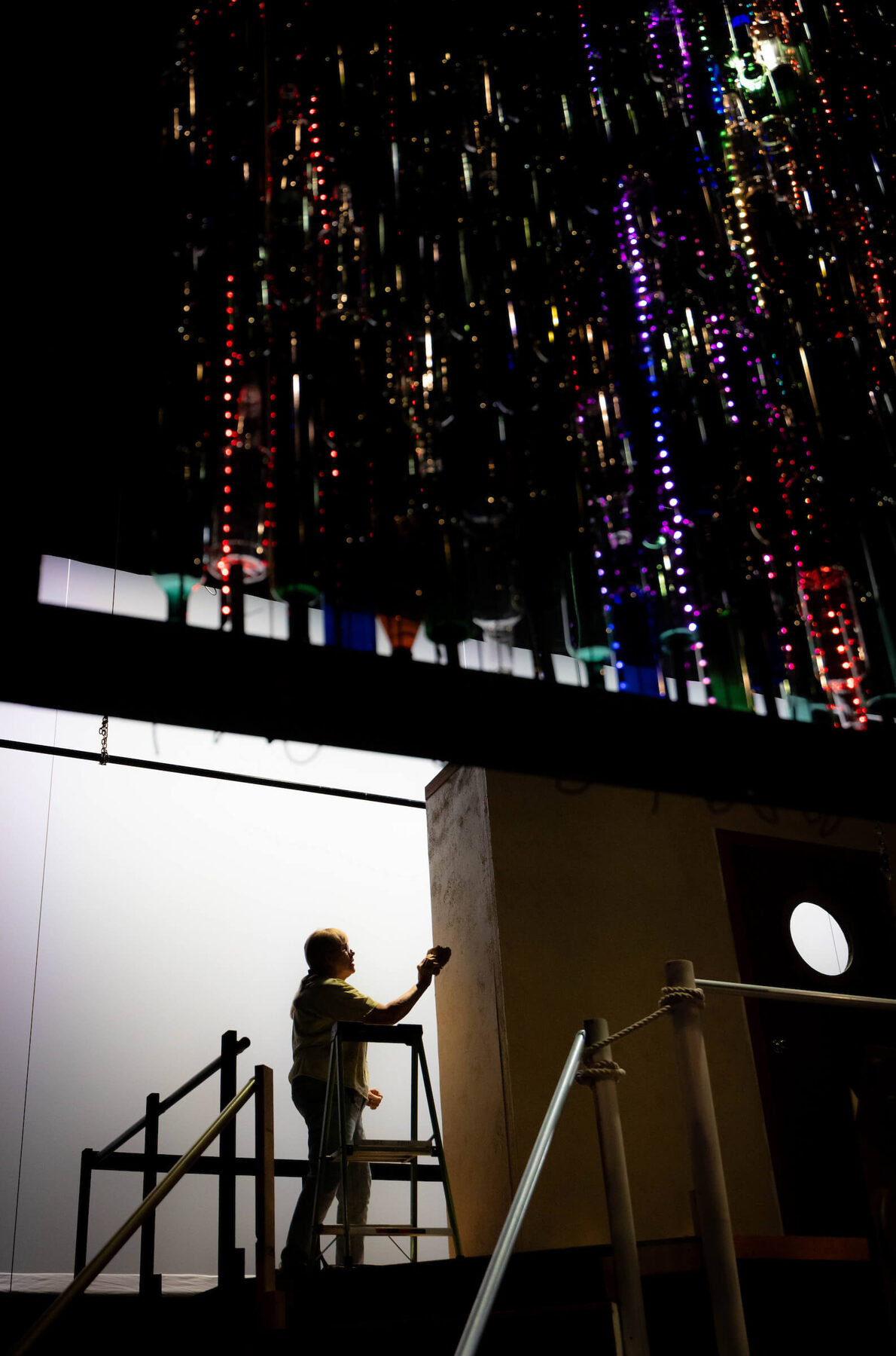
Rehearsal
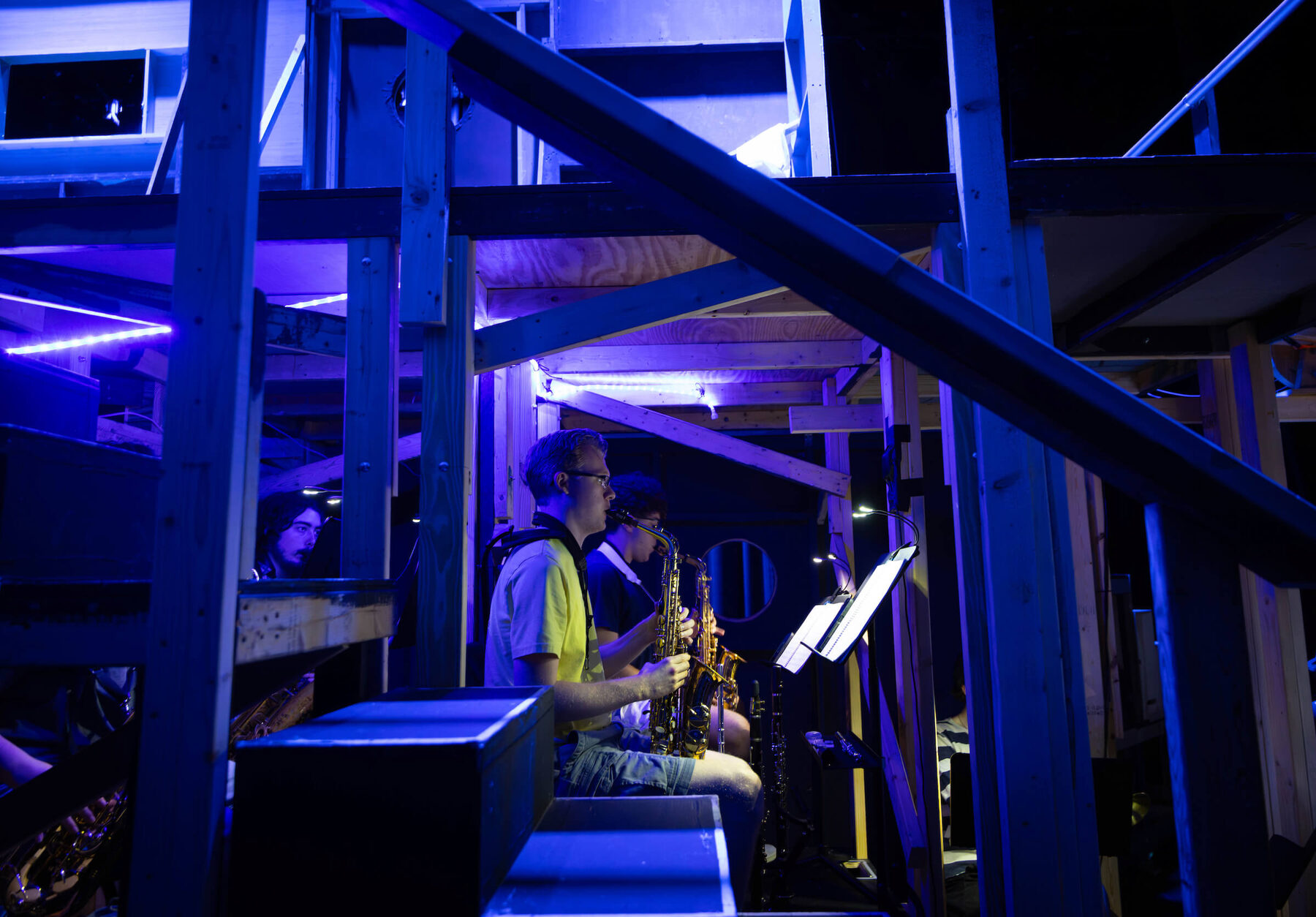
Cole Porter, campus hours
Anything Goes asks students for precision disguised as ease — the hardest kind of fun. Shipboard
sparkle only works if the company trusts the tempo enough to play inside it.
Schultz’s rehearsal habit is simple to say and expensive to practice: show up like
the audience is already in the seats. Cue sheets, breath, and the unglamorous work
between jokes become the real curriculum.
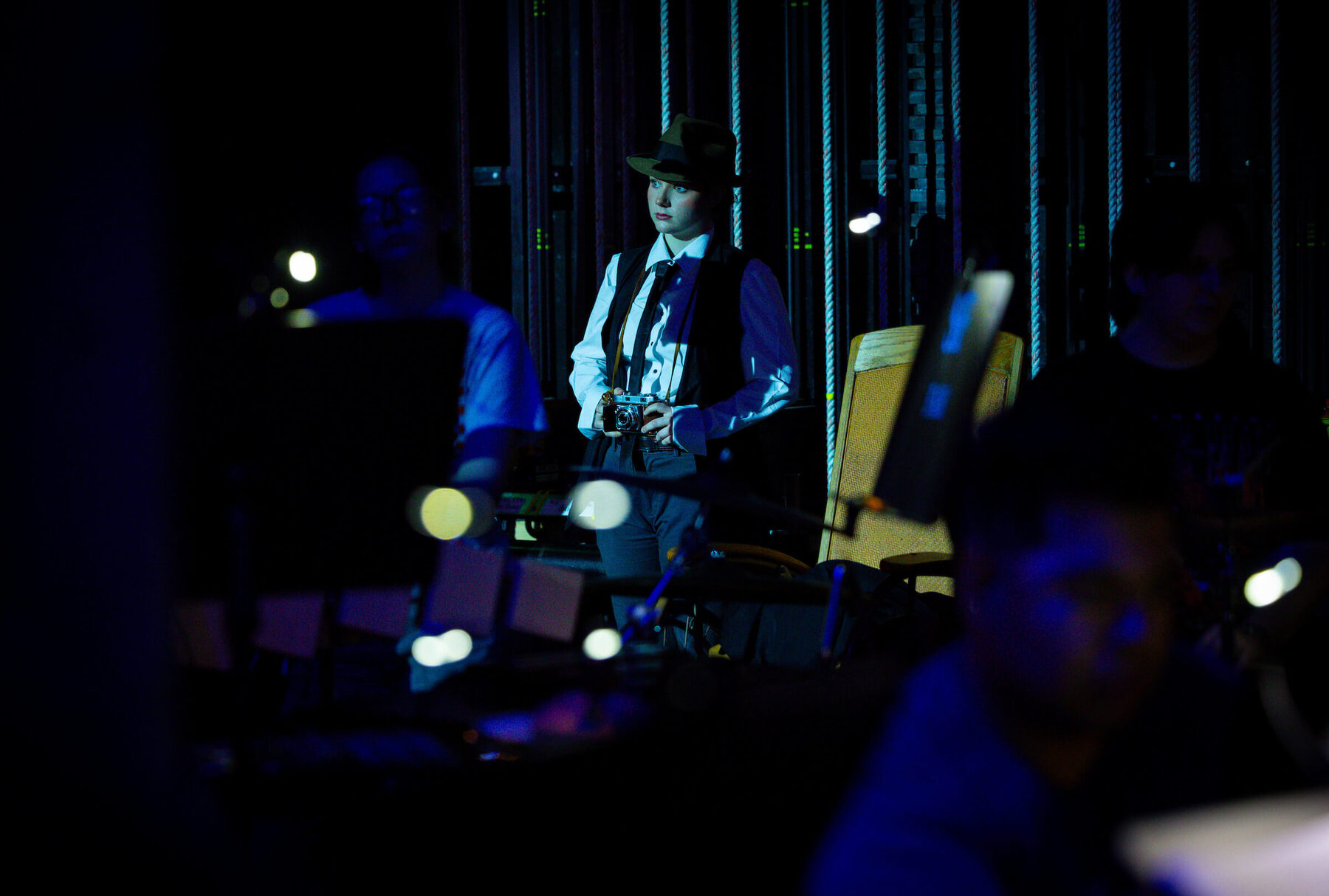
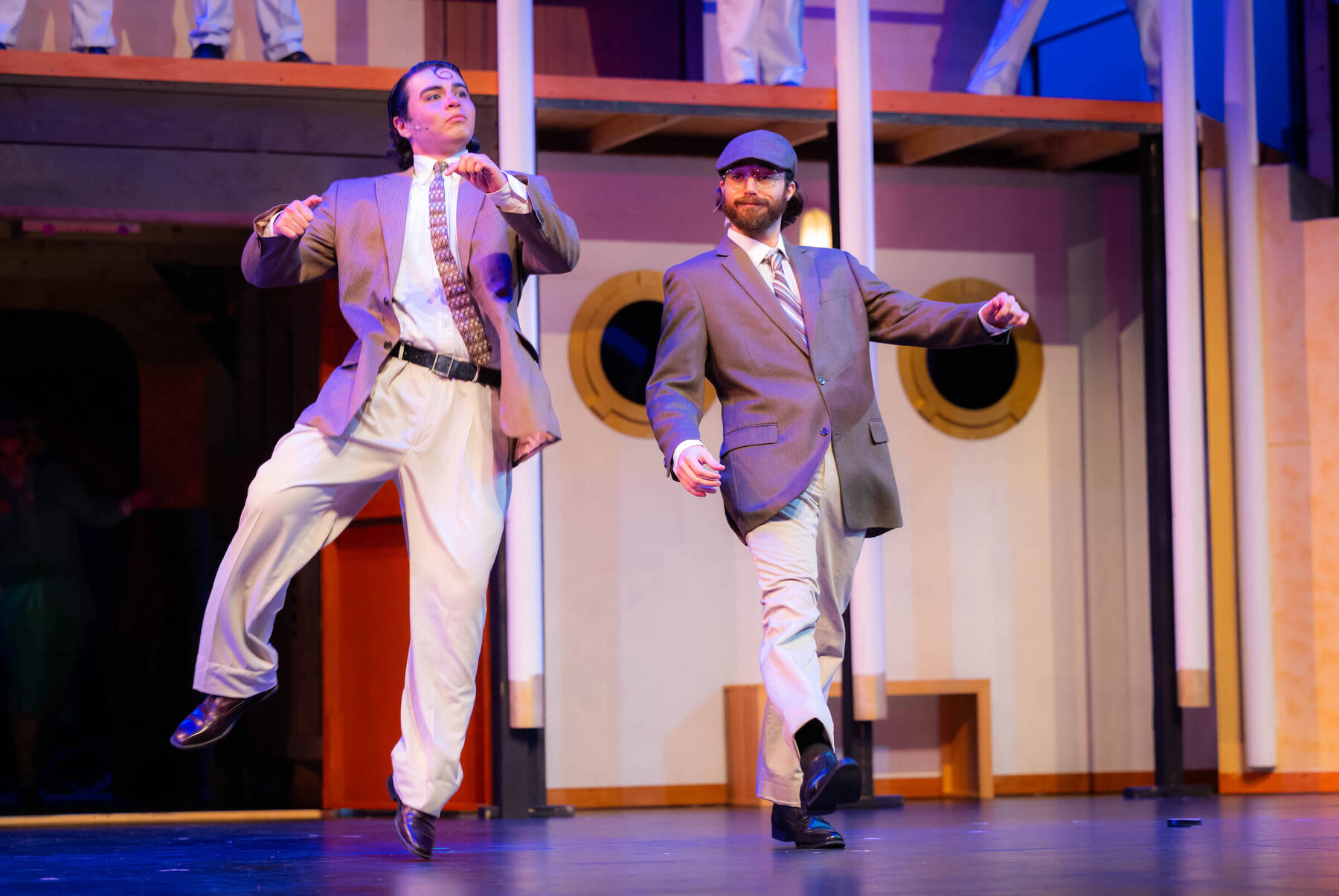
Opening night
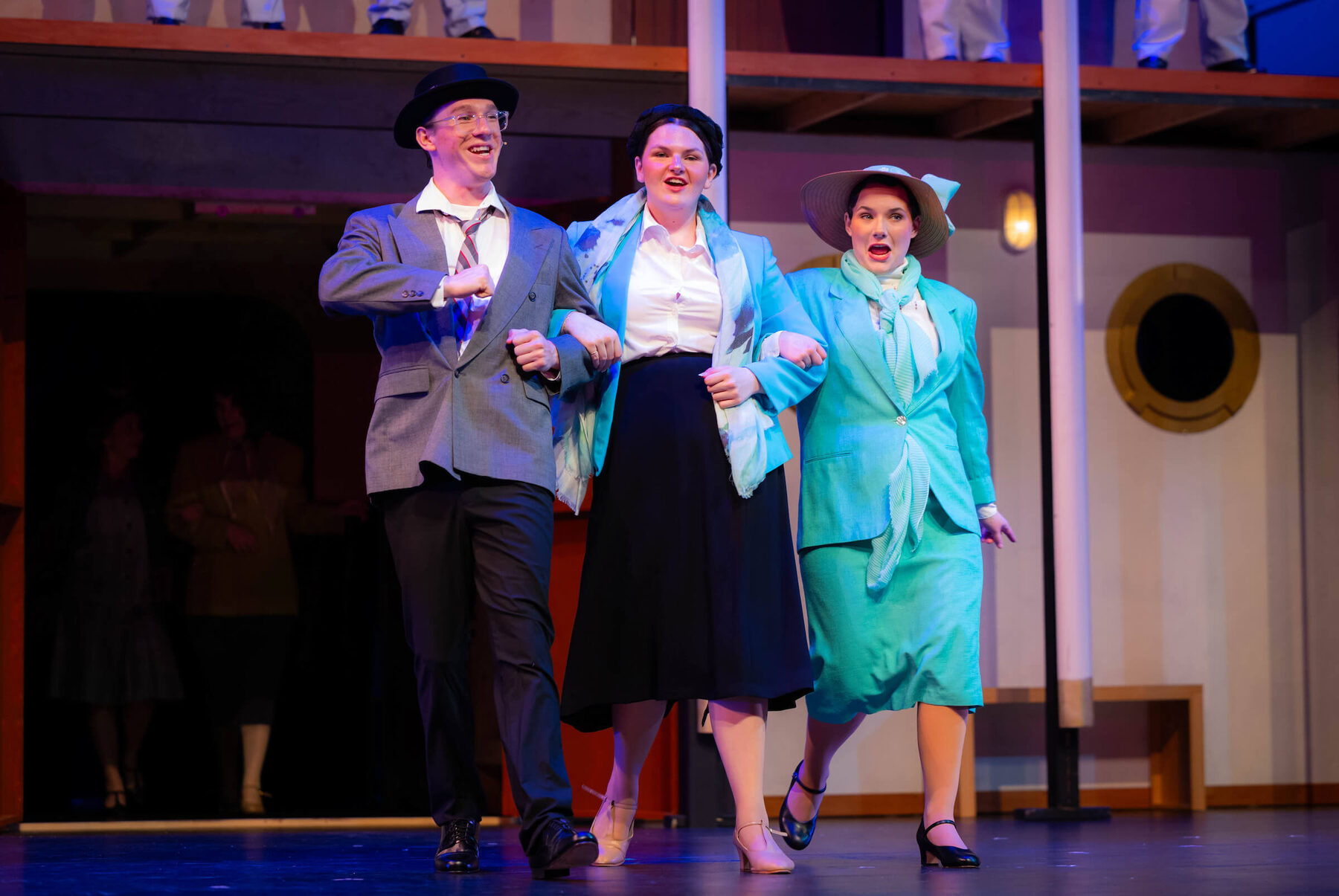
When the house laughs on time
Opening night is when the syllabus becomes audible. Timing that felt abstract in week
three suddenly has a room full of people answering it.
For Schultz, that laugh is not a scoreboard. It is proof that students learned to
listen to each other — the same listening he asks for in Theatre Appreciation and
in every note after a dress rehearsal.
Offstage
Still the mentor between projects
Film work comes and goes. The students who walk into his classroom every semester
stay the point. Even while playing George Washington on a national screen, he kept
finals week and Santa Fe teaching duties as non-negotiable.
“That’s why I don’t care about my screen time,” he has said of film work. “What’s
best about film is moments.” The same sentence could hang over a student scene study.
Chapter · The Washington call
They didn’t tell him the project — or the role
The film work that put Schultz behind a prosthetic nose and historically accurate
false teeth did not arrive as a glamorous open call. It circled back to graduate school.
In his first semester at the University of Florida he played the title role in George Washington’s Boy, written by actor Ted Lange — better known as Isaac from The Love Boat — alongside a classmate who would later direct for Sight & Sound Theatres, the Pennsylvania
company behind A Great Awakening.
Years later an unsolicited email asked whether he would audition for an undisclosed
part. “They didn’t tell me what the project was, or even the role,” Schultz said.
“I assumed they were just wanting a self-tape demo but said ‘We want you to come up
to Pennsylvania.’ It was a full screen test with makeup, costume, performing into
a camera. About a month later, they offered me the role.”
He returned for fittings, molds, and impressions — prosthetics for Washington’s nose
and hand-crafted teeth — then shuttled back and forth to wrap his scenes. The private
premiere in December 2025 conflicted with Santa Fe finals. He skipped the premiere.
The students came first.
“I haven’t even seen the film yet,” he said. “I’m just as eager to see it as everybody
else.”
Who shares the stage
Students, cues, and the Washington side quest
Ensemble work — the picture of a program that rehearses like it means it.Faculty portrait, still ready for a callback.Shipboard comedy, campus stakes.
“They didn’t tell me what the project was, or even the role.”
SFFine Arts · Theatre
See him teach
Theatre Appreciation and the rehearsal habit
Schultz’s classrooms treat attention like a craft. Students leave knowing how a joke
lands — and why listening is half the role. Whether the course is Theatre Appreciation
or a mainstage musical, the standard is the same: show up prepared, and treat the
room like it matters.
Virginia vowels, sheep teeth, and a soft-talking president
Playing Washington asked for the same deep dive Schultz asks of students: research
until the body believes it. He studied what a late-1780s Virginia accent might sound
like coming through the first president’s famous store-bought dentures — a combination
of sheep and human teeth with integrated springs.
“He was a quiet man, perhaps because of the teeth,” Schultz explained. “I got my prosthetic
teeth the day before the first scenes, and when I put them in, everything clicked.
There were reports from his inaugural address that Washington was a soft talker who
no one could easily hear. According to the directors, I look a lot like him — they
were always comparing me to $1 bills.”
Teacher that he is, he also hears a civics lesson in the film’s larger argument. “Of
great concern to Washington was ‘Now that we’ve got this, how do we keep it?’” Schultz
said. The Founders were imperfect, the Convention a grind of disagreement, the Constitution
an imperfect compromise nobody fully loved. “But it shows that even we — like they
were in the late 1780s — can be very opposed to each other, and still hammer out something
we believe in that is much bigger than ourselves.”
In the wings · portraits and production stills
Shipboard companyFaculty portraitFinale energyIn the lightStill readyBack to the house
The production
A campus musical that refuses to treat joy as optional.
Anything Goes is a campus musical that refuses to treat joy as optional — and Schultz refuses to
treat joy as accidental. The production only works if students rehearse like the laughs
are earned. That standard is what he brings from every earlier chapter: Dallas stages,
Iowa classrooms, New York detours, UF voice work, and a film set that asked him to
disappear into history without disappearing from Santa Fe.
Chapter · What he wants students to take away
Treat attention like a craft
Show up to rehearsal like the audience is already in the room.
Learn the joke’s timing — then learn why the pause matters more.
Want stories where characters struggle, change, and find redemption — onstage and
off.
Keep one faculty relationship after you graduate; mentorship is a two-way street.
Chapter · What stays
Moments over screen time
Schultz still talks about the Washington film with the same mix of awe and homework:
prosthetics, Virginia vowels, sheep-and-human-teeth dentures, and a private premiere
he missed because finals week at Santa Fe would not wait for a red carpet. He learned
about the casting call through that Sight & Sound thread, taped and tested without
knowing the project, and only later discovered he would play George Washington while
still showing up for Santa Fe students the next morning.
“That’s why I don’t care about my screen time,” he said. “What’s best about film is
moments. I love that! I was so thankful to be a part of portraying this. I want to
see storytelling where characters develop, struggle and go through change. These are
the stories that I want to tell. Things that give us hope — redemption stories.”
That is the through-line from Dallas talent shows to Iowa acting classes, from New
York security work to a Gainesville voice studio, from Anything Goes opening night to a national screen. The camera comes and goes. The students keep
showing up — and Saints Spotlight will keep telling stories about the people who meet
them there.
For more on his film casting, see Santa Fe’s earlier feature A Revolutionary Role.
More Saints Spotlight
Longform stories about Santa Fe students, alumni, and the communities they serve.
Related feed arrives when the Spotlight archive ships.