President Broadie testifies to the pivotal role community colleges play in longevity and productivity of older Americans

December 17, 2025
In a Congressional hearing held Wednesday, Dec. 10, Santa Fe College (SF) President Paul Broadie II testified before the U.S. Special Senate Committee on Aging about the profound impact community colleges have on older Americans with regard to their engagement in society and the associated wellness benefits, as well as their impact on the workforce.
The hearing, entitled “Aging with Purpose: The Positive Impact of Seniors in Today’s Economy,” was headed by Florida Senator Rick Scott, committee chair, and Ranking Member Kirsten Gillibrand. The hearing highlighted the vital contributions older Americans make to the U.S. economy through work, caregiving, volunteerism, education.
“Thank you for the opportunity to testify on the critical role community colleges play in empowering older Americans to remain active, engaged, and economically secure,” Broadie said. “I am honored to speak on behalf of Santa Fe College and the more than 1,000 community colleges serving more than 10 million students nationwide — institutions that stand at the intersection of lifelong learning, workforce development, and community well-being.”
Senator Scott recognized President Broadie for “his unwavering commitment to student success, innovation and community engagement, partnerships, and for shattering barriers that impede student success.”
“Santa Fe’s been really successful at this for a long time,” Scott noted.
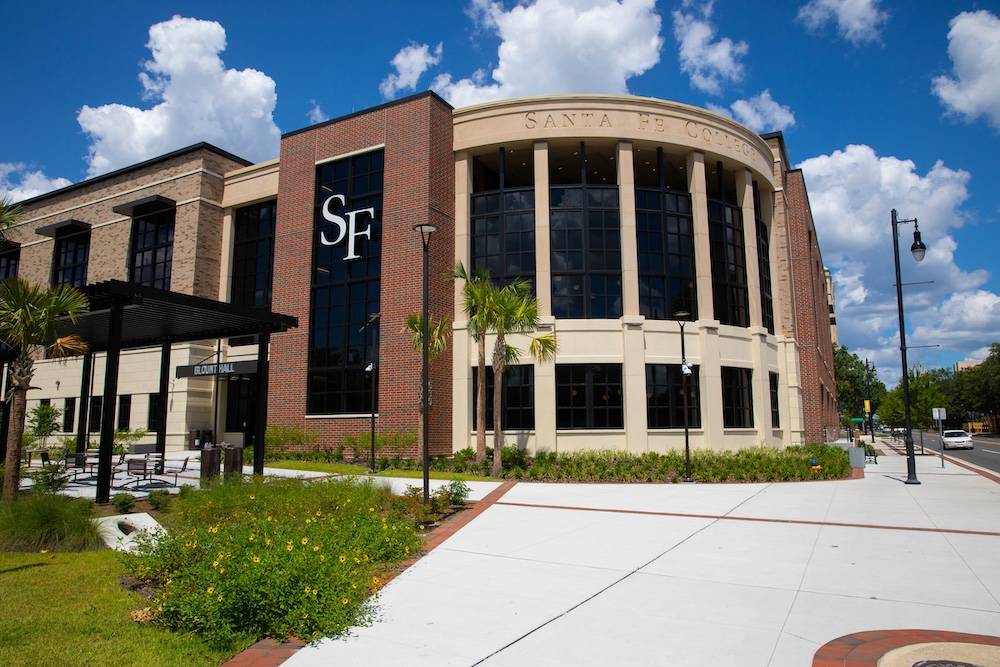
Broadie illustrated how SF has targeted older adults who are seeking to reengage in the workforce, and explained how community colleges are deploying older Americans through incubators like SF's Center for Innovation and Economic Development (CIED) — a collaborative space on the College's Blount Campus for early-stage start-ups. Broadie testified how these assets are helping students in their 40s, 50s and 60s turn their passions into a new business enterprise, citing at least 11 new planned launches from SF's incubator from that demographic.
He also touted SF’s ACB Excel Program, a revolutionary, two-generation model that empowers entire families who are unemployed or underemployed by providing parents and their school-aged children with simultaneous access to academic programs, support services, and enrichment activities, as well as addressing the growing trend of grandparents raising their grandchildren by helping them reskill to enter the job market.
The Senate committee heard how SF is fulfilling the traditional mission of community colleges in providing access to programs for older students who are coming into the workforce after life circumstances, and need to reskill, upskill or obtain a certification with a quick onramp that allows them to become financially viable in a shorter amount of time.
“For more than 50 years, Santa Fe College’s Displaced Homemaker Program has provided critical support to individuals — often older adults — who must return to the workforce after the death of a spouse, divorce, or a major change in life circumstances,” Broadie said. “Many completers of the program have landed gainful employment opportunities as a result of the skills they learned."
Florida Senator Ashley Moody told Broadie, “I want to commend you for thinking outside the traditional educational opportunities at our state colleges. For so long, we thought about universities meaning one thing, and trade school or skills development meaning something else. In reality, both are trying to skill people to enter into a workforce. If we’re going to bang into people’s heads that they need to go to college to be successful, we’re going to have to unwind what that means.”
The Congressional testimony came a day before Florida Governor Ron DeSantis released his FY 2026-27 education budget, which funnels nearly $2 billion to the Florida College System (FCS) to empower state colleges to educate and train the workforce necessary to sustain an ever-growing population and economy.